CEO Breakfast Brief · March 2026

The Case for
Going Direct

Why South Africa's most connected FMCG distributor is positioned to become the country's most compelling D2C platform — and what that requires.

R130B+ SA Grocery E-Commerce Market
38% Annual Growth Rate
R7B+ SG Gateway Revenue
7 Global Proof Points
scroll
Act I · Here's What You Asked For

A working D2C platform,
built on your existing infrastructure.

We built a fully functional e-commerce prototype using SG Gateway's real product catalogue, real collection point data, and real brand relationships. Not a mockup. A working system that demonstrates what this could look like to consumers on day one.

🛒
Product Catalogue
309 products across 24+ brands. Category filters, brand filters, search, add to cart. Built from your actual product database.
📍
Collection Point Map
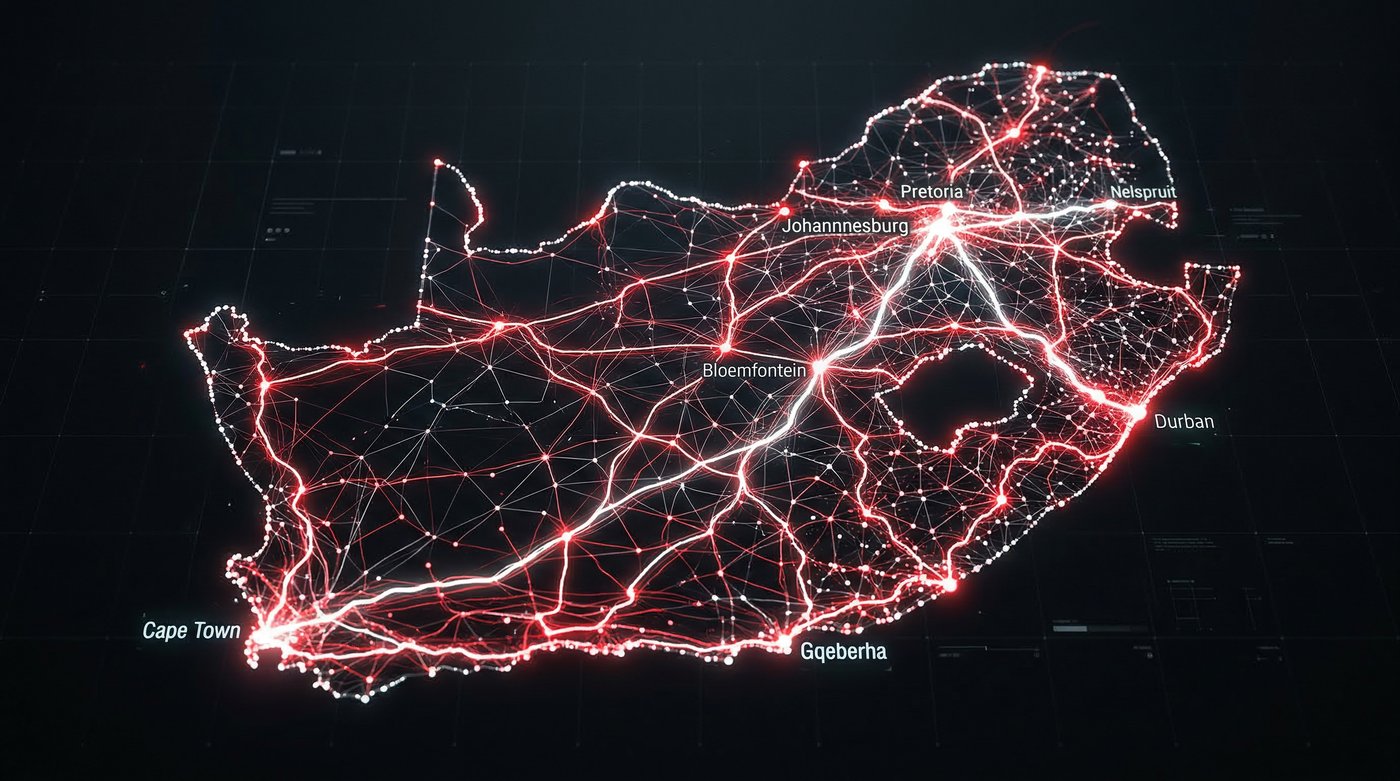
12,500 collection points across all 9 provinces, live on a map. Consumers find their nearest pickup in seconds.
📦
Subscription Boxes
5 curated box types from R299/month. Household Essentials, Coffee Lovers, Braai Bundle, Healthy Family, Snack Attack.
🍳
Recipe Kits
10 South African recipe kits with full ingredient lists — consumers add entire meal kits to cart with one click.
💬
Ask SG — AI Chat
Conversational product discovery. "What do I need for a braai?" routes customers to relevant products instantly.
📱
Mobile-First Design
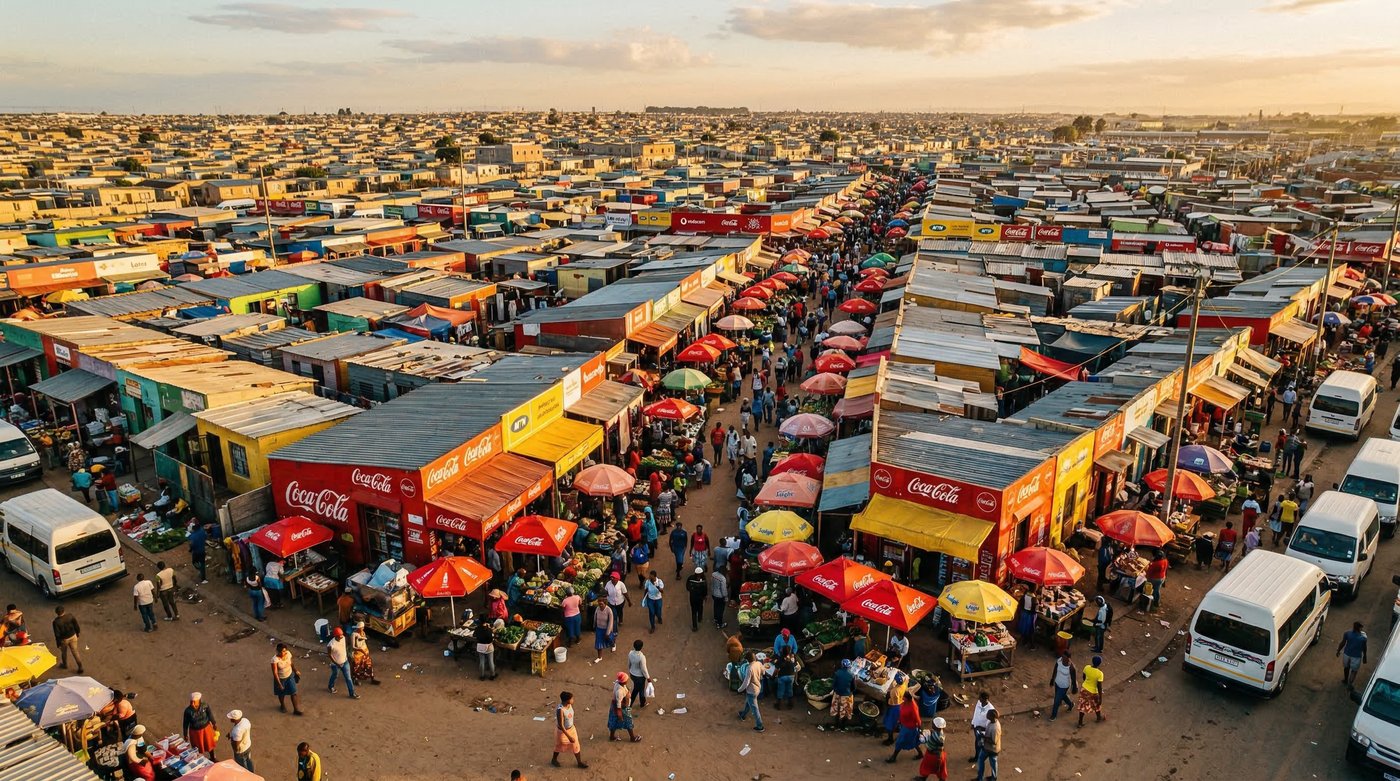
Built to work flawlessly on any device. 68% of SA grocery browsing happens on mobile — this was built for that reality.
Explore the Prototype
Built on real SG Gateway data.
Live and functional now.
Act II · Here's What We Found

The market is moving.
SG Gateway is already inside it.

South Africa's grocery e-commerce market is not emerging — it's arrived. The question is not whether to play. The question is whether to play on someone else's platform or your own.

R130B+
SA Grocery E-Commerce Market Size
2025 estimate
38%
Annual Market Growth Rate
Consistent 2023–2025
23,000+
SG Gateway Distribution Outlets
Including 12,500 convenience stores
24+
Brand Partners
Cadbury, Coca-Cola, Heineken, Unilever & more
Who's Already Playing
  • Checkers Sixty60 — 60-minute grocery delivery, SA market leader
  • Pick n Pay asap! — 60-minute delivery, Checkers' primary rival
  • Woolworths Dash — Premium quick commerce, rapid expansion
  • Takealot — General marketplace with growing FMCG presence
  • Mr D Food — Delivery-first, Naspers-backed, national scale
  • Walmart / Massmart — September 2025 major e-commerce push
What None of Them Have
  • Direct relationships with 24+ FMCG brand manufacturers
  • 12,500 existing collection points (last-mile already solved)
  • Exclusive distribution relationships in convenience channel
  • No margin intermediary — manufacturer to consumer
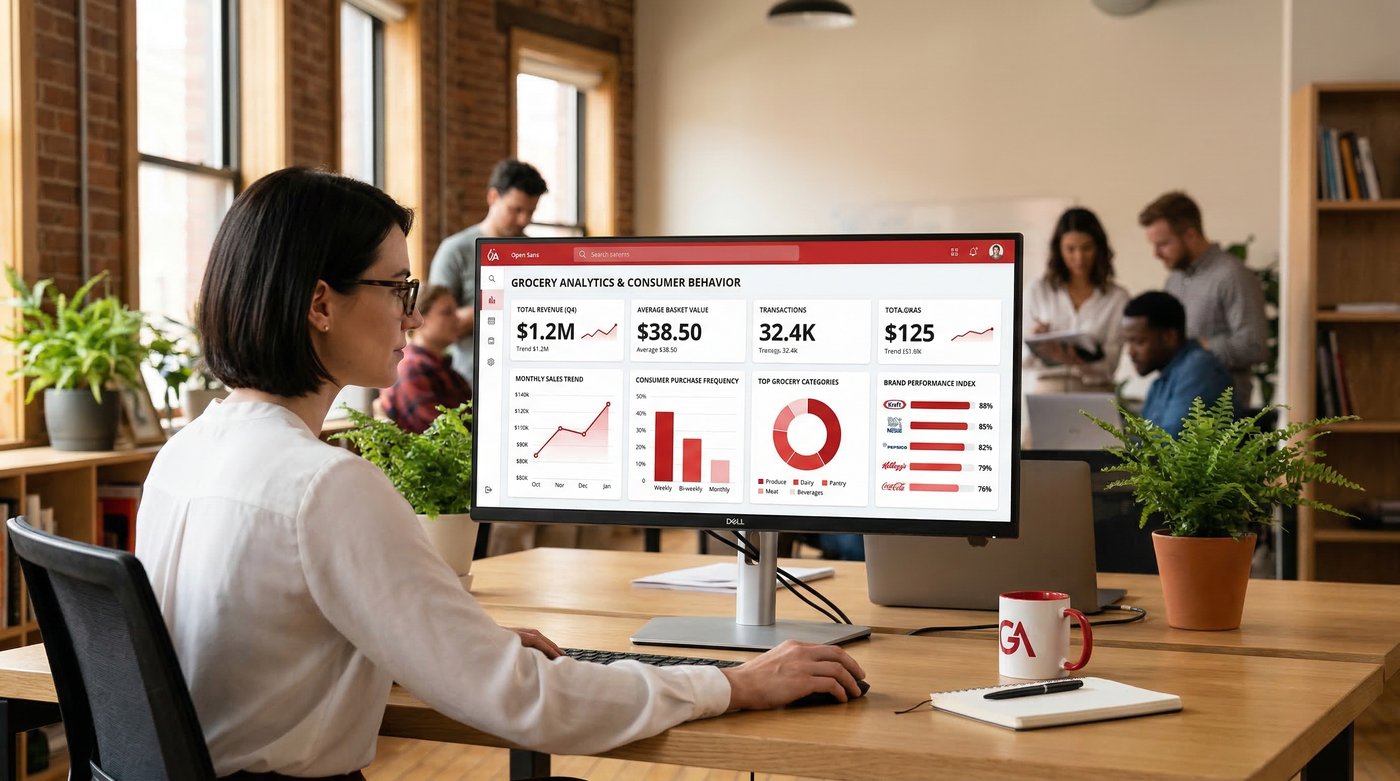
  • First-party consumer data that brands will pay for
  • R7B+ infrastructure already built and fully depreciated

The structural position that's being missed

Every competitor in the market is a retailer going digital. SG Gateway is a distributor — which means the infrastructure problem every retailer is spending hundreds of millions to solve (warehouse networks, last-mile logistics, FMCG sourcing at scale) is already built. The D2C opportunity is not a new business. It's the same infrastructure, pointed at a different customer.

Act III · Here's What The Best In The World Are Doing

Seven reframes that changed
what was thought to be possible.

Each case study below documents a company that took an existing constraint — too B2B, too few SKUs, no direct customer data — and turned it into a structural advantage. Every one of them has a direct parallel to SG Gateway's position today.

Case Study 01
The Distributor Goes D2C
Sysco Corporation — US Foodservice Distribution
$81B
FY2025 Revenue · 17% market share in a $370B TAM
Sysco spent a century selling exclusively to restaurants and institutions. When COVID-19 collapsed B2B volumes overnight, it opened consumer-facing retail — "Sysco To Go" stores in Houston — and direct-to-consumer online ordering. A $81 billion B2B distributor entered consumer commerce using its existing infrastructure.
SG Gateway parallel: Sysco is the exact structural analogue. The infrastructure problem every D2C entrant is trying to solve — Sysco already had it. So does SG Gateway.
Case Study 02
Constraint is a Feature, Not a Limitation
Gopuff — Quick Commerce Dark Store Model
+20%
Basket size increase when fresh SKUs added · ~4,000 curated SKUs vs 50,000 in supermarkets
Gopuff built its business on ~4,000 SKUs — about 1% of a supermarket's range. The founding insight: for immediate-need FMCG purchases, consumers are overwhelmed by choice and will pay a premium for curated, guaranteed-available inventory delivered in under 20 minutes. Its private-label "Basically" line now appears in nearly 20% of all orders, up 70% year-on-year.
SG Gateway parallel: SG Gateway doesn't need to out-range Checkers or PnP. It needs to curate the 2,000–4,000 highest-velocity FMCG SKUs in South Africa — and win on availability, speed, and brand trust.
Case Study 03
Conversation Replaces Catalogue
Albertsons Companies — $76B US Grocery Retailer
+10%
Basket size from AI "Ask AI" tool · +21% digital sales YoY · 49M loyalty members
Albertsons became the first retailer globally to deploy Google Cloud's Conversational Commerce agent, branded as "Ask AI." Natural-language product discovery replaced catalogue browsing. CEO Susan Morris confirmed +10% basket size for users on the Q3 FY2025 earnings call. Digital sales grew 21% YoY — nearly 10x the rate of in-store. By December 2025, an OpenAI agent can build entire shopping carts from a recipe description.
SG Gateway parallel: The "Ask SG" AI chat in the prototype is exactly this model — a conversational layer that replaces catalogue friction, increases basket size, and creates data on what consumers actually want.
Case Study 04
Logistics Infrastructure Becomes the Consumer Product
Amazon Prime — Logistics → Consumer Subscription Brand
$44.4B
Subscription revenue FY2024 · 220M members · 13B same/next-day deliveries (2025)
Amazon launched Prime in 2005 to convert its logistics cost centre into a consumer-facing product. For $139/year, consumers paid for access to the delivery network — transforming fulfilment from an operational expense into a standalone revenue business. Prime members now spend $1,170/year on Amazon vs. $700 for non-members. Delivery became the reason to subscribe, not the cost of doing business.
SG Gateway parallel: Amazon's proof: logistics infrastructure can be repositioned as the core consumer value proposition. SG Gateway's collection network is not a constraint — it's the membership benefit.
Case Study 05
First-Party Data Becomes a Revenue Line
Kroger / 84.51° — Retail Media Network
$527M
Estimated 2024 retail media profit (Guggenheim Securities) · 62M household data pool
Kroger's grocery business runs on ~22% margins. Its data subsidiary 84.51° allows CPG brands to buy precision advertising using Kroger's first-party purchase data from 62 million US households — targeting based on actual purchase behaviour, then measuring incremental sales. Walmart Connect earned $6.4 billion in global ad revenue in 2025 (+46% YoY). Target Roundel earned $915 million. These are high-margin revenue streams built entirely from existing consumer data.
SG Gateway parallel: Every FMCG brand SG Gateway distributes currently pays for blind trade promotions. A D2C platform creates actual consumer purchase data — which can be sold back to brand clients as performance insights.
Case Study 06
Subscription Solves D2C Unit Economics
Chewy Autoship — D2C Pet Supplies
83%
Of net sales via Autoship subscription · $2.58B/quarter · +15% YoY
Chewy launched Autoship — a flexible auto-delivery subscription with 5–10% discounts. Customers set their own SKUs, quantities, and delivery cadences. The low friction of opt-in (instant savings) combined with high friction of opt-out (resetting routines) created extraordinary retention. Autoship grew from 66% to 83% of total revenue — a 17 percentage point increase in subscription depth since its 2019 IPO. Dollar Shave Club built the same model in razors, acquired by Unilever for $1 billion.
SG Gateway parallel: A "Household Autoship" for FMCG staples converts D2C from unprofitable single transactions into a predictable, high-margin recurring revenue base.
Case Study 07
The Logistics Moat as Brand Promise
Inditex / Zara — Vertically Integrated Retail
57.8%
Gross margin FY2024 · 85% sold at full price · 2–3 week design-to-shelf cycle
When competitors were outsourcing manufacturing to Asia on 12-month lead times, Zara built a 2–3 week design-to-shelf cycle by vertically integrating its supply chain. New collections arrive in stores twice per week. 85% of inventory sells at full price vs. the industry average of ~60%. Advertising spend: less than 1% of revenue — supply chain speed does the marketing. €38.6 billion in FY2024 revenue; 57.8% gross margin.
SG Gateway parallel: Zara's proof — operational infrastructure, built for efficiency, can be repositioned as the core consumer brand promise. SG Gateway's cold chain and last-mile capability is a moat no pure-play e-commerce entrant can replicate short-term.
Act IV · Three Questions Only You Can Answer

The analysis can tell you what.
Only you can answer why now.

Before the next phase of work can be scoped properly, there are three strategic questions that only SG Gateway's leadership can answer. Each one changes the shape and scale of what gets built. We're not here to push an agenda — we're here to design the right one.

01
Logistics
How does this get delivered?
The D2C platform can be built. But it needs a last-mile answer before it goes live. The B2B logistics infrastructure that moves product to 23,000 trade outlets is not automatically available for a consumer-facing service with different volume profiles, time windows, and delivery expectations.
  • Extend existing B2B network to consumer collections (lowest capex path)
  • Build a dedicated consumer logistics layer (highest control, highest cost)
  • Partner with an established last-mile carrier (Courier Guy, Pargo, etc.)
02
Product Strategy
Do you sell what you distribute — or expand?
The current portfolio of 309 products from 24+ brand partners is a strong starting point. But a consumer FMCG platform almost certainly needs a broader range to serve full basket needs. The strategic question is whether to expand sourcing, bring in complementary brands, or win on depth within the current portfolio.
  • Lead with existing distributed brands only (fast to launch, clear positioning)
  • Expand with complementary FMCG sourcing to cover full basket (grocery + household)
  • Create a private-label range under the SG Gateway brand (highest margin potential)
03
Brand Identity
Is this "SG Gateway Direct" or a new brand?
The SG Gateway brand carries strong trade and distributor associations. A consumer-facing platform may benefit from a distinct brand that signals the D2C proposition clearly — without the cognitive overhead of "why is a distributor selling to me?" Alternatively, the transparency is a feature: buying direct from the source is a genuine value proposition for price-sensitive consumers.
  • Lead with SG Gateway brand — transparency and trust as differentiator
  • Launch under a new consumer brand, SG-backed but separately positioned
  • Test both and let consumer response determine the winning brand architecture
An honest note: These questions don't have right answers that can be discovered from research alone. They require decisions about risk appetite, capital allocation, and strategic intent that only SG Gateway's leadership can make. The next phase of work is designed to give you the information needed to make those decisions with confidence — not to make them for you.
Act V · Here's What We'd Do Next

A 6–8 week analysis
that answers the questions above.

The prototype is proof of concept. The case studies are proof of precedent. What's missing is a South Africa-specific feasibility analysis that answers the three questions honestly, with real data — and produces a build proposal grounded in actual unit economics and operational constraints.

Weeks 1–2
Stakeholder Interviews
  • Leadership team alignment sessions
  • Brand partner appetite conversations
  • Logistics operations capability review
  • Finance: unit economics baseline
Weeks 2–4
Consumer Validation
  • Target consumer research (3 segments)
  • Prototype testing with real SA consumers
  • Pricing and subscription sensitivity
  • Collection point usage patterns
Weeks 3–5
Logistics Feasibility
  • B2B vs. dedicated consumer model costing
  • Third-party last-mile partner evaluation
  • Collection point activation requirements
  • Tech stack and integration assessment
Weeks 5–8
Full Build Proposal
  • Recommended model with unit economics
  • Brand architecture recommendation
  • 12-month phased build roadmap
  • Investment requirement and return model

The output of this analysis is a decision.

Not more research. A clear recommendation with the data to back it. The 7 companies in this brief all moved from analysis to execution within 6–18 months. The market window in South Africa is open now. The question is whether SG Gateway claims its structural advantage — or watches a well-funded competitor use it instead.